
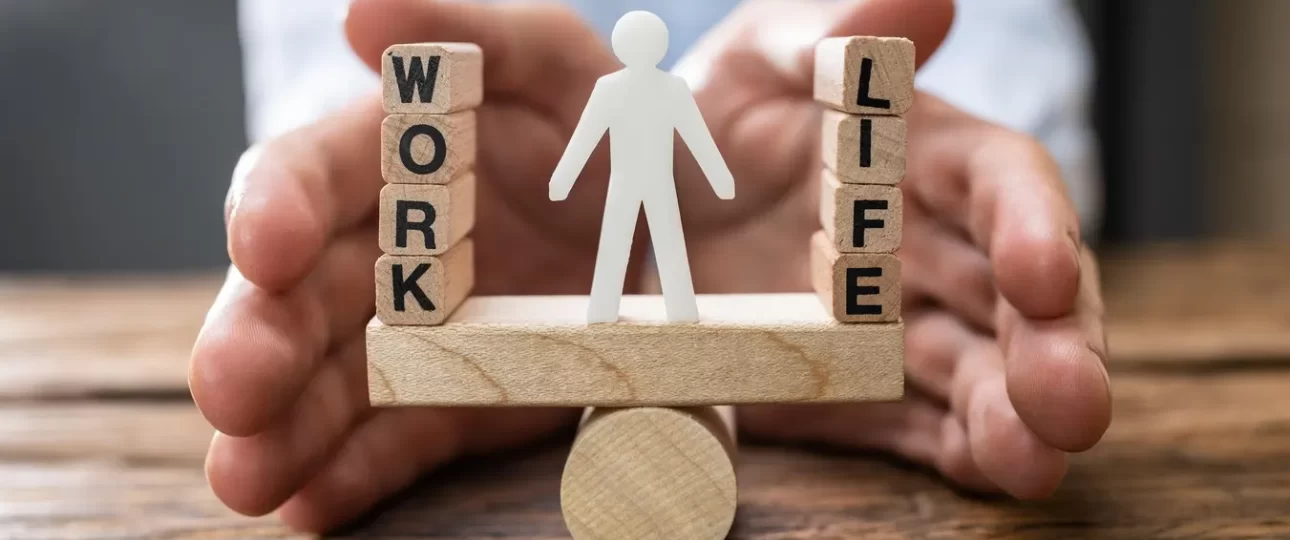
Long workdays, family commitments, social expectations, and the ever-growing pull of technology – combined, they are leaving people feeling exhausted and stretched far too thin. Not surprisingly, this has been linked to a significant increase in stress, an overall decline in health, and a lack of time for people to engage in activities that give their lives meaning and fulfillment. Does this sound familiar?
The good news is that the key to balance isn’t about devising a mythically perfect schedule – it’s in finding a routine that allows you to feel fulfilled, productive, and healthy in your personal and professional life. And that is achievable – first, a few basics.
Work-Life Balance: A necessity, not a luxury
Work-life balance is often mistaken to mean spending an equal number of hours at work and at home. It is actually about being satisfied with and in control of the various areas of your life. It means having enough time in the day to meet the demands of both work and your personal life, and being able to meet those demands and responsibilities without feeling stressed and overwhelmed. When the demands of one’s personal or professional life consistently outweigh the other, work-life conflict is inevitable. Sometimes you just don’t have enough time or energy, sometimes work interferes with home life or vice versa, and some people additionally find themselves in a caregiver role with all the strains and stresses that entails.
Because work-life balance directly impacts mental and physical health – and therefore overall quality of life – it should not be seen as a luxury but a necessity.
Overwhelmed? You’re not alone
Studies have consistently shown that more than half of Canadians report feeling “overloaded” by the many roles they juggle, and more than a 25 per cent describe themselves as “super stressed.” Cultural attitudes toward the value of long work hours, the rise of dual-income households, increasing divorce rates, and the growth of single-parent families all contribute to greater time pressures and shifting role expectations.
Technology adds a whole other layer, while it gives flexibility to work anywhere, anytime, it also makes it difficult, or even impossible, to disconnect. Constant emails, messages, and notifications erode the boundaries between work and home, creating what some refer to as a time famine and an inability to immerse themselves fully in one of their many roles.
Why Balance Matters
The effects of imbalance go far beyond feeling tired or busy. Effects reach into almost every aspect of one’s life:
Health:
- Stress is linked to 75–90% of physician visits and has been shown to contribute to major illnesses, including heart disease, cancer, lung conditions, and even suicide.
- Chronic stress can double the risk of a heart attack.
- Symptoms like fatigue, insomnia, irritability, and difficulty concentrating are often signals or symptoms of imbalance in one’s life.
Relationships:
- Stress doesn’t just stay with the individual; the impacts spill over and are felt by one’s families, coworkers, and friends.
- Work-family life conflict is linked to higher rates of marital strain, divorce, and challenges in parenting.
Work
- Decreased productivity and creativity.
- Higher absenteeism and turnover.
- Lower job satisfaction and engagement.
On the other side of the equation, when balance across one’s life is supported, individuals report better health, stronger relationships, greater job satisfaction, and higher commitment to their work organizations.
Signs You Might Be Out of Balance
You may be experiencing an imbalance if you notice:
- Constant feelings of being overwhelmed or irritable.
- Guilt or shame about neglecting responsibilities at home or work.
- Difficulty concentrating or frequent fatigue.
- Trying to “make more time” by reducing sleep.
- Restlessness, nervousness, or a sense of losing control over your life.
Recognizing these signs when they emerge is the first step toward making positive changes.
Practical Strategies to Reclaim Balance
Finding balance will look different for everyone, as their work and personal lives are all highly unique. Still, research and the reported lived experiences of countless individuals point to a number of strategies that almost anyone can follow to try to promote balance in their own lives.
At Work
- Set realistic goals: Make a daily to-do list and focus on the most important tasks first. Achievable/realistic goals boost one’s sense of control and reduce stress.
- Be efficient: Break large tasks into smaller steps, minimize procrastination, and reduce unnecessary “busy work.”
- Communicate effectively: Open communication builds understanding between individuals and often reduces the perceived pressure of everyone involved. This can include sharing concerns, giving praise, brainstorming, and more.
- Take breaks: Even short (one or two-minute) pauses improve focus, decision-making, and stress management.
At Home
- Create boundaries: Protect your personal time, try to disconnect from email and work calls after hours.
- Manage responsibilities: Divide household tasks fairly if in a shared household and, when possible, try to let go of non-essential chores.
- Prioritize self-care: Exercise, sleep, and healthy eating are all foundational for resilience, along with personalized self-care routines.
- Make space for joy: Engage in hobbies or pleasant activities daily, no matter how small.
In Your Community
- Be selective: It is okay to say no. Not every request or opportunity requires your “yes.” Choose what’s most meaningful.
- Seek support: Build strong connections with friends, family, and colleagues. A good support system improves both physical and mental health.
Moving Forward
Achieving work-life balance in one’s life isn’t just a quick fix; it’s an ongoing process of adjustment as one’s career, family, and personal goals evolve. The payoff is worth it. Greater balance leads to reduced stress, improved health, stronger relationships, increased productivity, and a more sustainable well-being. In the long run, success in one area of life at the cost of another is rarely satisfying. True success comes from harmony, where work supports life, and life supports work.
References:
Wedgwood, J. (2022). The importance of Work-Life Balance | The Happiness Index. The Happiness Index. https://thehappinessindex.com/blog/importance-work-life-balance/
Sanfilippo, M. (2024). How to Improve your Work-Life Balance Today. Business News Daily. https://www.businessnewsdaily.com/5244-improve-work-life-balance-today.html
Rao, T. S., & Indla, V. (2010). Work, family or personal life: Why not all three? Indian Journal of Psychiatry, 52(4), 295. https://doi.org/10.4103/0019-5545.74301
Mental Health America. (2025). Work Life Balance | Mental Health America. https://mhanational.org/resources/work-life-balance/
CMHA. (2021). Work-life Balance: Make it your business – CMHA National Site. https://cmha.ca/brochure/work-life-balance-make-it-your-business/
Government of Canada, Canadian Centre for Occupational Health and Safety. (2025). Work-Life balance. https://www.ccohs.ca/oshanswers/psychosocial/worklife_balance.html
Centre for Addiction and Mental Health. (2025). Achieving Work-Life balance. CAMH. https://www.camh.ca/en/camh-news-and-stories/achieving-work-life-balance